In an electric or hybrid car, lifting your foot off the accelerator can slow the car more than you expect. The motor becomes a generator and sends some energy back into the battery as the car slows. How strong that feels is often a setting you choose.
What happens when you lift off
When you ease off the accelerator, the electric motor works the other way round, as a generator. That drag slows the car and returns some energy to the battery. The friction brakes, the pads and discs every car has, join in when you press the brake pedal harder or when the battery cannot accept more energy.
The effect feels like engine braking in a gas car, only stronger and smoother. Gentle slowing for traffic lights and corners can happen with no brake pedal at all. On most cars the brake lights come on when the car slows firmly this way, so the driver behind still gets a warning, though the exact behavior varies by car.
The settings you may find
Many cars offer a choice of how strongly the car slows when you lift off. A low setting coasts much like a gas car with an automatic gearbox. A high setting slows firmly, and on some cars it brings the car to a full stop, which owners often call one-pedal driving.
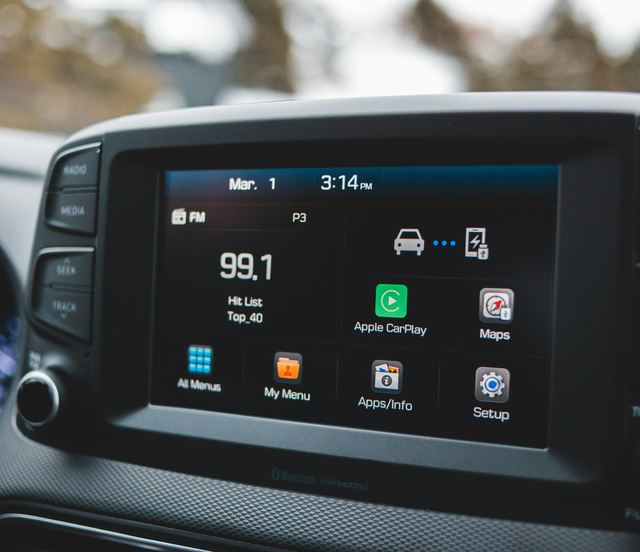
The control may sit in a driving menu on the touchscreen, on paddles behind the steering wheel or inside a drive mode. Some cars remember your choice and others return to a default at each start. The owner's manual names the options and says which ones stay.
- A low setting that coasts
- A middle setting that feels close to engine braking
- A strong setting that may bring the car to a stop
- On some cars, an automatic mode that reacts to traffic ahead
Getting used to it
The first drives on a strong setting can feel jerky, because your right foot is used to lifting off without much happening. Practice on a quiet road or in an empty parking lot first. Lift off slowly rather than all at once, and the slowing comes on smoothly.
Before long, most drivers stop thinking about it and plan their slowing earlier. Ease off well before a red light and let the car do most of the work. Keep your foot ready for the brake pedal anyway, because a sudden stop needs the friction brakes and the car cannot read the road for you.
- Lift your foot slowly, not all at once
- Start easing off earlier than you would in a gas car
- Keep your foot hovering near the brake in traffic
- Use the brake pedal for any sudden or hard stop
When the slowing feels weaker
On a cold morning, or when the battery is nearly full, the car may limit how much energy it takes back. Lifting off then slows the car less than usual, and a message or a dashed line on the power gauge may say so. Press the brake pedal as you would in any car; the friction brakes are there for exactly this.
Slippery roads matter too. On ice or packed snow, strong slowing through the drive wheels can make them lose grip, and some cars soften it on their own. A gentler setting gives smoother control on a slick road, and the article on cold winter climates covers the rest of a cold-weather routine.
Looking after the friction brakes
Because the motor does much of the everyday slowing, the pads and discs on an electric car may see little use. Follow the brake service schedule in the owner's manual rather than waiting for the brakes to feel worn. Some manuals also describe a brake check the car runs on its own, or a setting for wet weather.
A grinding noise, a pulsing pedal or a brake warning light goes to the carmaker's service department or a qualified technician. Strong regenerative braking can hide a brake that is not working well, since you rarely press hard. The friction brakes still do the hard stops, so they deserve the same attention as on any car.
What to take away
- Lifting off the pedal slows the car and returns energy
- Try a strong setting on a quiet road first
- Cold or a full battery can weaken the slowing
- The brake pedal still does the hard stops
Try it while parked
- Find where the regenerative setting lives on your car
- Read the manual's names for each level
- Check whether your choice survives a restart
- Find the power gauge and how it shows energy going back
Questions
No. It covers gentle and moderate slowing, but a sudden stop, a steep downhill or a slippery road still calls for the brake pedal. Keep your foot ready to move across at any moment, and press the brake whenever the car is not slowing as you expect.
On most cars they light when the slowing is firm enough, so drivers behind get the usual warning. The point at which they light varies by car, and the owner's manual describes how yours behaves.