The battery is the part of a used electric car you cannot see and most want to understand. It loses some capacity with age and use, and how much varies from car to car. You can learn a good deal from the car's own screens, a report from a service department and a careful look at the range estimate.
What a tired battery looks like from the driver's seat
A battery that has lost capacity holds less energy when it is full, so the car goes less far on a charge than it did when new. Nothing rattles or smokes. The difference shows up quietly in the range estimate, in how often the car needs plugging in and, on some cars, in a capacity reading tucked into a menu.
Some loss is ordinary, and a little of it may not matter for your driving at all. What you want to know is whether this car has lost more than you would expect, and whether the car or its paperwork shows any battery fault, warning or repair. The checks below take those questions in order.
- Less range on a full battery than when the car was new
- A battery warning or reduced-power message on the screen
- Service records that mention the battery or its cooling
- Charging that stops early or runs slowly for no clear reason
Start with the car's own screens
Begin with what the car tells you. Many electric cars have an energy or battery menu on the touchscreen, and a few show a capacity or health reading there directly. The owner's manual says which screens your model has and what each reading means, so read that section before the viewing.
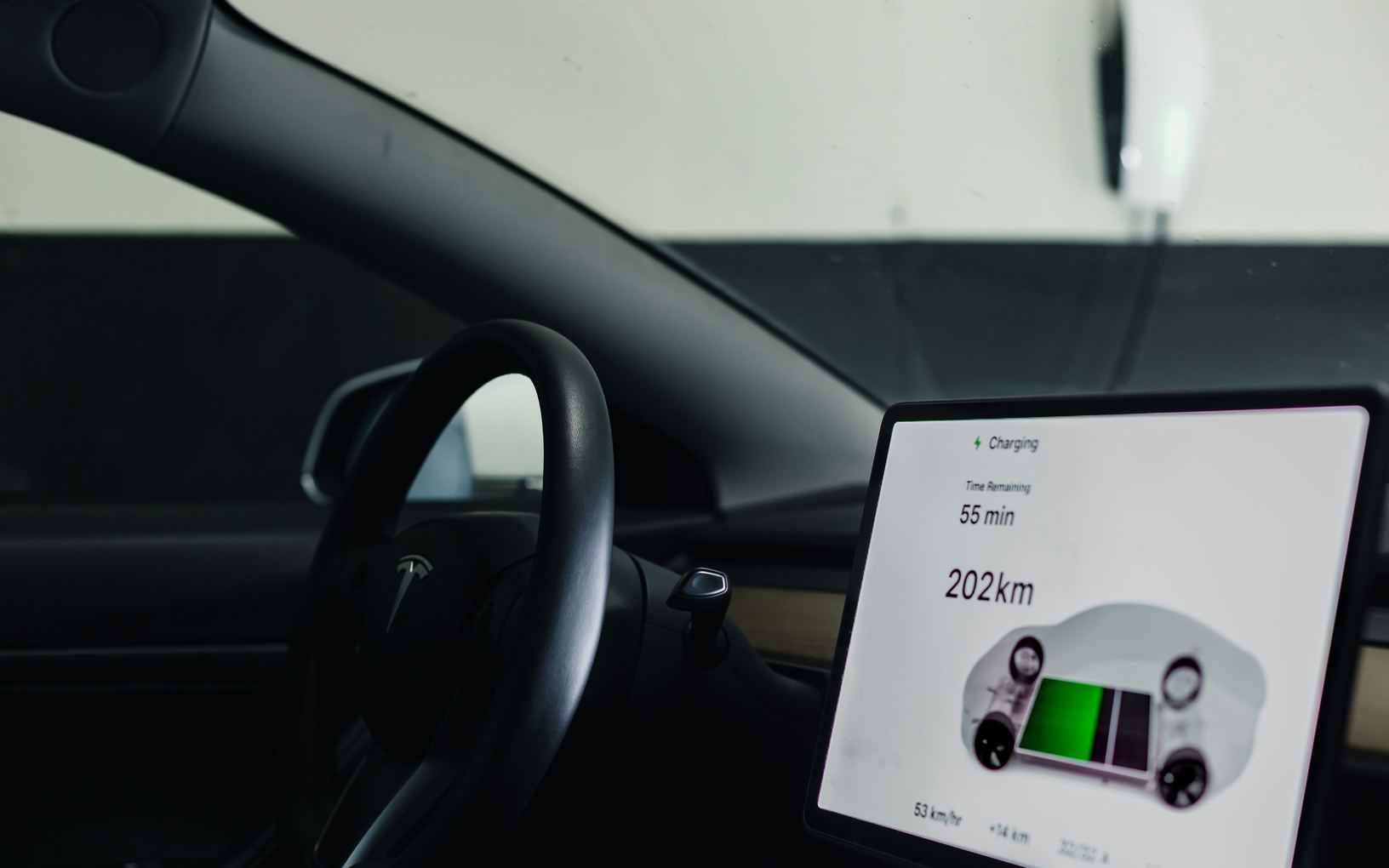
Look at the charging screen as well. It shows the charge limit the last owner set, the charge level now and the range the car expects at that level. Scroll through the stored messages too: a battery or charging alert saved in the car is worth a photo and a direct question to the seller.
- The energy or battery menu named in the owner's manual
- The charge limit, the charge level and the range beside it
- Any stored message about the battery, charging or reduced power
A battery health report
A battery health report reads data from the car's own battery management system and states the battery's condition as the carmaker or the testing equipment measures it. The carmaker's service department can often run one, and some sellers have a recent copy. It gives a closer look at the battery than anything you can read off the dashboard.
Ask for a report with a recent date and the car's VIN on it, so you know it belongs to this car. Read what it measures and how, since reports from different sources may not use the same method or wording. If anything in it is unclear, the service department that produced it can explain the reading.
- A recent date and the car's VIN printed on the report
- Who produced it and how the reading was taken
- Any fault codes or notes about the battery's cells or cooling
How the range estimate behaves
The range estimate on a used car is not a battery test. Most cars base it partly on recent driving, so a previous owner's fast highway trips or a cold week can pull it down, and gentle town driving can lift it. The charge limit matters too: a car set to stop short of full shows a smaller number at the top.
Watch how it moves rather than how big it is. Note the estimate and the charge level before a test drive, then again after, and see whether the drop seems in proportion to the drive. A number that falls sharply on a short, gentle drive on a mild day is a question for the service department. The article on the range estimate and energy screens explains how the figure is built.
How the car has been kept
Heat, long stretches parked at full charge or close to empty and very frequent fast charging tend to wear a battery faster, though how much varies by car. A seller who charged at home most nights and kept the car in a garage can usually tell you so plainly. Ask, and notice how specific the answer is.
Service records fill in the rest. Look for software updates that mention the battery, any work on the battery's cooling and any battery repair or replacement. A replaced battery is not bad news in itself, but the paperwork should say what was done, by whom and what coverage came with the new part.
- Where the car was parked and where it was charged
- How often it used fast-charging stations
- Any battery repair, replacement or cooling work on file
- Software updates that mention the battery or charging
What to take away
- Read the battery screens named in the owner's manual first
- Ask for a recent battery health report with the car's VIN on it
- Judge the range estimate by how it falls, not by its size
- Look for battery work and battery updates in the records
Ask the seller
- Do you have a recent battery health report for this car?
- Where was the car usually charged and parked overnight?
- How often did you use fast-charging stations?
- Has the battery ever been repaired or replaced?
- Has a battery warning ever appeared on the screen?
Questions
Not on its own. The estimate moves with recent driving, the weather and the charge limit, so a low number can have ordinary causes. A battery health report and a look at how the estimate falls during a drive tell you far more.
Ask whether you can take the car to the carmaker's service department yourself and have one run. If neither is possible, give the car's own screens, the records and the test drive more weight, and decide how much uncertainty you are comfortable with.