Good questions turn a pleasant viewing into a useful one. A used electric car raises a few of its own, about how it was charged, what came with it and which accounts it still belongs to. Bring this list, ask plainly and write down the answers.
Before you go to see it
Some questions spare you a wasted trip. Ask them by phone or message before you arrange a viewing, and notice how readily the seller answers. A seller who knows the car well can usually describe its charging habits, its records and its paperwork without needing to look anything up.
Ask for the VIN at this stage too, so you can look up open recalls and read a vehicle history report ahead of the viewing. If the seller will not share the VIN before a viewing, that is worth knowing early, and asking the reason is fair.
- The VIN, so you can check recalls before you visit
- Whether a recent battery health report is available
- Whether the warranty booklet and charging cable are with the car
- Why the car is being sold
How the car lived
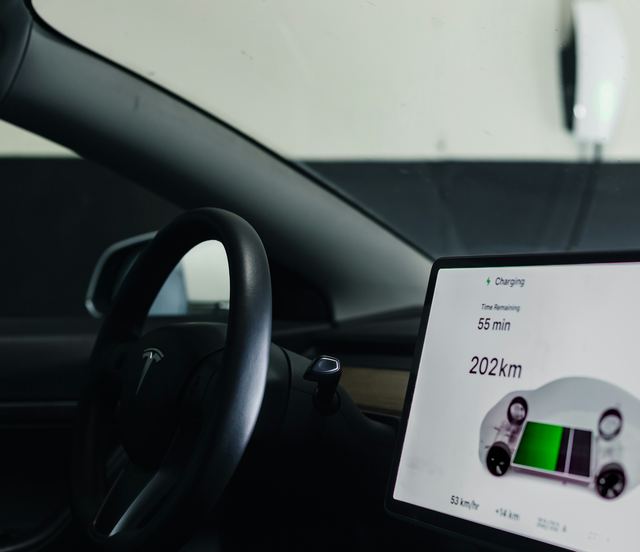
The way a car was charged and kept says a lot about its battery. Ask where it was parked at night, how it was charged at home and how often it used fast-charging stations. Ask about its usual drives as well: short town trips, long highway runs or a mix of both.
Listen for specific answers. A seller who says the car charged in a garage most nights, with fast charging only on the odd trip, is giving you something you can weigh. Vague answers are not proof of a problem, but they put more weight on the battery health report and the records.
- Where it was parked overnight and in what weather
- What it was charged from at home
- How often it used fast-charging stations
- What charge limit it was usually set to
Paperwork, accounts and what came with it
Ask to see the title, the service records, any battery health report and the warranty booklet, and check that the VIN on each agrees with the car. Ask what came with the car when it was new: every key fob or key card, the portable charging cable and any adapters. Missing items are easier to discuss before you decide than after.
Ask how the car is linked to the carmaker's own app, and whether the seller will remove it from their account and delete their phone keys at handover. Ask, too, which connected features were switched on for the first owner and whether they stay with the car. The article on features sold as subscriptions explains why that matters.
Questions for a private seller
A private seller usually knows the car's daily life most closely, so lean on that. Ask whether you can have the car looked at by the carmaker's service department, or by an independent technician who works on electric cars, before you decide. A seller who agrees readily is giving you room to check.
Ask whether the title is in the seller's own name. Ask whether the car has ever been in a collision or a flood, and whether anyone other than the carmaker's service department has worked on the battery or the charging system. Note the answers next to what the history report shows.
- Whether the title is in the seller's own name
- Whether you can have a technician look at the car first
- Any collision, flood or battery work in its past
Questions for a dealer
A dealer may know less about the car's daily life and more about its condition when it arrived on the lot. Ask what checks the dealer ran on the battery and the charging system, and ask to see the results rather than a summary. Ask whether any open recalls were completed before the car was offered for sale.
Ask which warranties remain, from the carmaker and from the dealer, and get each one in writing with the car's VIN on it. Ask whether the car arrived with its charging cable and adapters, and whether anything was replaced. Whatever the dealer tells you, you can still check the recall lookup and the warranty status yourself.
- The battery and charging checks the dealer ran, on paper
- Recalls completed before the car went on the lot
- Each remaining warranty in writing, with the VIN
What to take away
- Ask for the VIN before you visit and check recalls with it
- Ask how the car was charged, parked and driven
- Confirm what came with the car when it was new
- Get every answer that matters in writing
Ask the seller
- Why are you selling the car?
- Can I see the title and the service records side by side?
- Can a technician I choose look at the car first?
- Has the car been in a collision or a flood?
- Is anything that came with the car when new now missing?
- Will you put what you know about the battery in writing?
Questions
Most questions are the same, but the emphasis shifts. A private seller can tell you how the car was driven and charged from day to day. A dealer can tell you what it checked and what it repaired, and should put warranty details in writing.
That is an answer of its own. You can ask for the paperwork instead, check what you can yourself using the VIN, or decide the car is not the one for you. A clear answer to a clear question is a fair thing to expect.
Yes. Notes taken at the time are easier to compare across cars and to check against the paperwork later. Ask for anything about warranties, recalls or the battery's condition in writing as well.