Public chargers carry a small family of plugs, and only some of them fit any given car. Learning your own charge port first makes every station easier to read. This article describes the shapes you will meet, what a charger's label tells you and when an adapter belongs in the trunk.
Your own charge port comes first
Before you go anywhere, open the charge port door and study the socket. Some cars have a single socket for every kind of charging, while others have an upper section for slower charging and a lower section, sometimes behind its own flap, for fast charging. The owner's manual names the connector your car uses.
Take a photo of the open port on your phone. At an unfamiliar station you can hold it up beside the plugs and see straight away which cable fits. It also helps when you describe the car to a station's support line or ask a host whether their charger suits it.
The shapes you will meet in North America
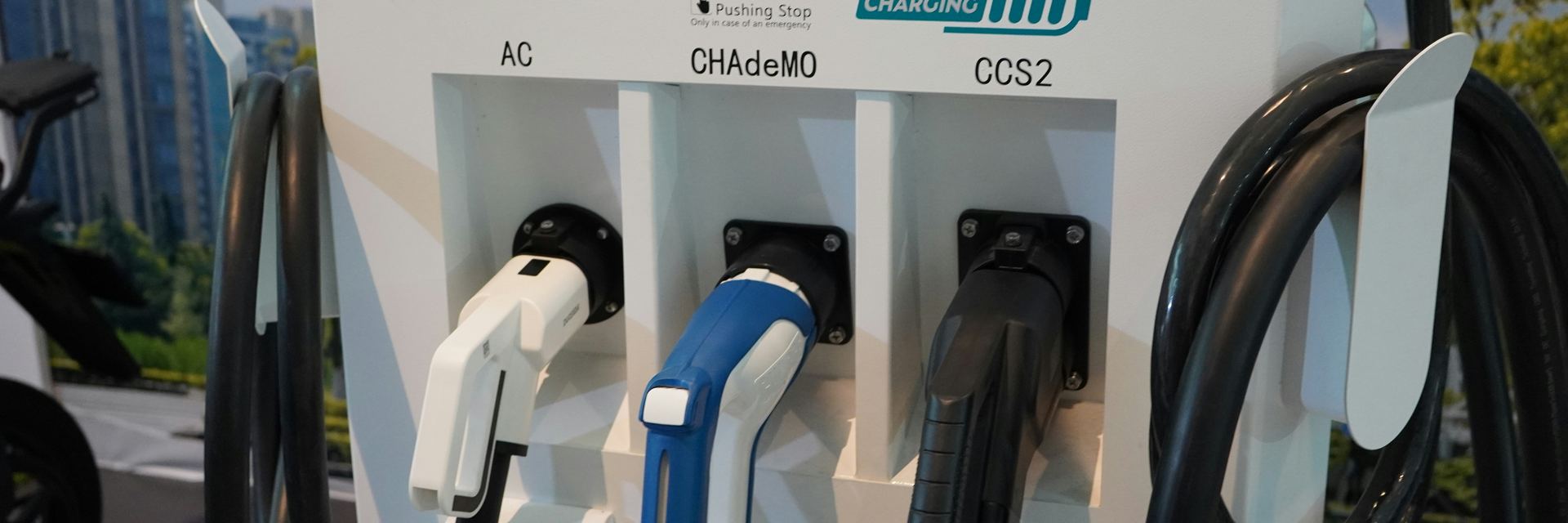
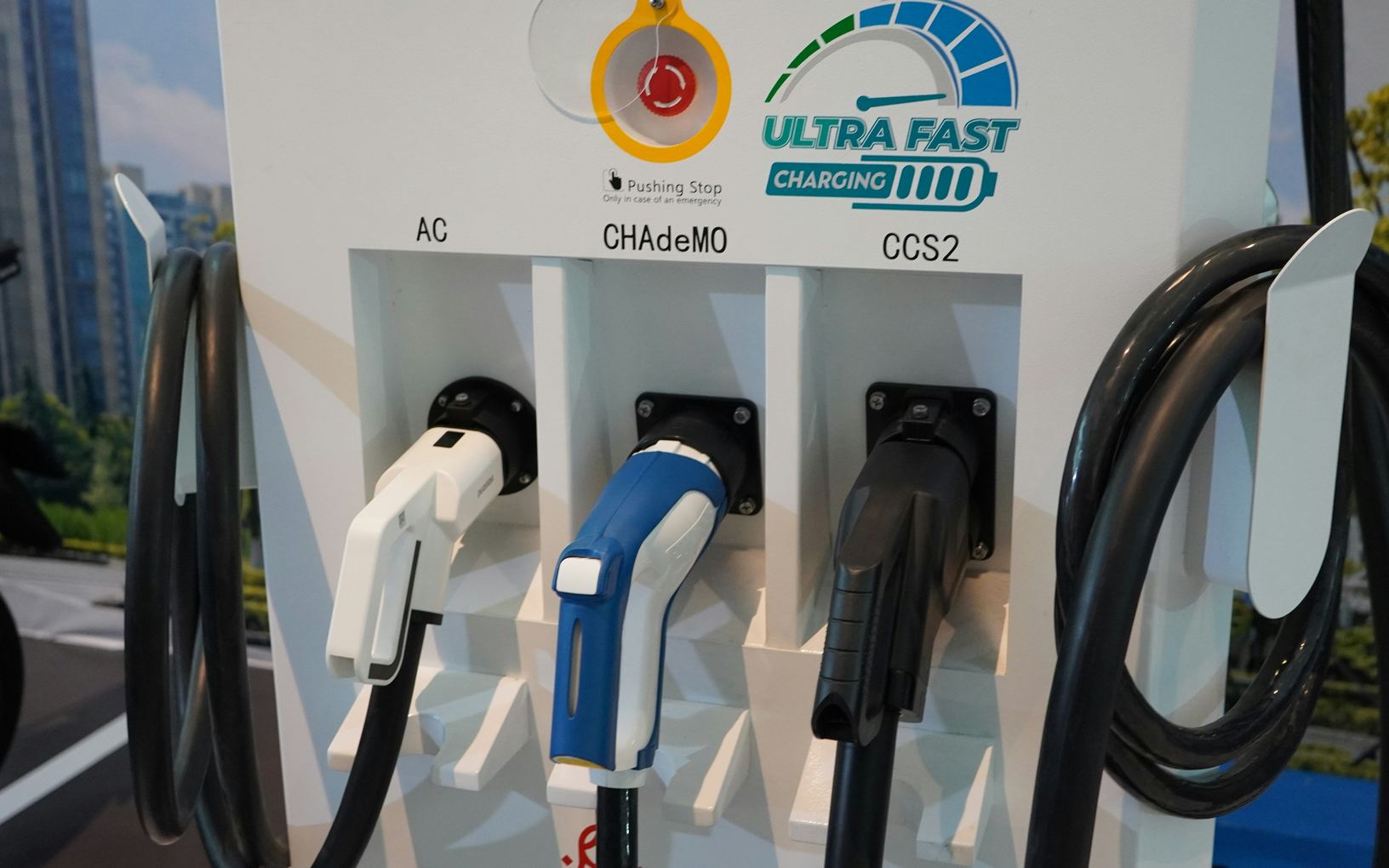
Public chargers here carry a handful of plug shapes, and many stations offer more than one. Newer cars increasingly share the same slim connector for both slow and fast charging. Older cars and many current ones use a round plug for slower sessions, with a larger fast-charging version that adds thick pins underneath.
A few earlier models used a different fast-charging connector that is now rare at new stations. If your car is one of them, check which stations still carry that plug before every trip. The article on older charging standards in the used car section covers this in more depth.
- A slim connector most new cars in North America now use
- A round plug found on most curbside and garage chargers
- A larger fast-charging plug with thick pins below the round part
- An older fast-charging connector some earlier models used
Reading a charger's label and screen
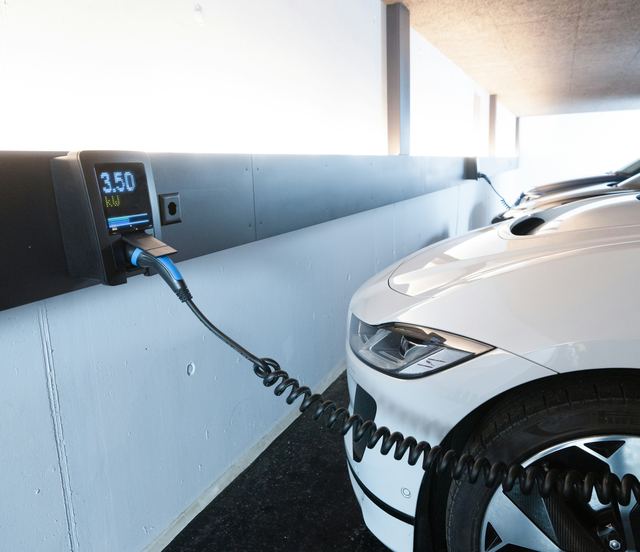
Every public charger carries a label or screen showing which plugs it offers, often with a drawing of each one beside its cable. The label also states the most power the unit can give, which is a ceiling rather than what your car will receive. Look for the support line and the stall's own identifier while you are there.
Lights and screens vary from one station to the next. A colored ring or lamp usually shows whether the unit is ready, charging or faulty, and the screen may ask you to tap a card, scan a code or plug in first. Follow the order the screen gives, since starting in a different order sometimes stops the session from beginning.
- Which plug hangs on each cable
- The most power the unit can give
- How to start a session at this unit
- The support line and the stall's identifier
Adapters, used with care
An adapter can let a car use a plug it was not built for, but only one the carmaker supplies or approves belongs in your trunk. Some fast-charging adapters also need the car's software to support them, so check the manual or ask the carmaker's service department before relying on one for a trip.
Never use a cracked, loose or scorched adapter, and never stack one adapter on another. Household adapters and extension cords not meant for charging can overheat, so leave them out unless the carmaker's manual allows them. An adapter that feels warm or will not sit firmly is a reason to stop and use another charger.
Plugging in and unplugging
Line the plug up with the socket and push it in until it seats with a firm click. Most cars lock the plug in place during a session, and the charger or car screen confirms that charging has started. If the handle wobbles or the screen shows nothing, take it out, check for debris and try again.
To finish, end the session on the car or the charger before pulling the plug, then press the release and draw it straight out. Hang the connector back in its holder and lift the cable clear of the ground, where people walk and where a tire could crush it.
What to take away
- Learn your charge port before you need a public charger
- A photo of the open port makes any station easy to read
- A charger's label shows its ceiling, not your car's speed
- Use only adapters the carmaker supplies or approves
Before you set off
- Charge port photographed with the door open
- Connector type noted from the owner's manual
- Approved adapters packed, damaged ones left out
- Label checked for the plug on each cable
- Session ended before the plug comes out
- Cable hung back up and clear of the ground
Questions
Stations often serve cars with different charge ports, so they carry more than one plug shape. Usually only one cable is meant for your car. The drawing beside each cable on the label shows which is which.
Stick to adapters the carmaker supplies or approves for your car. A poorly made adapter can overheat or fail to lock, and some fast-charging adapters work only with cars whose software supports them. The manual lists approved adapters, and the carmaker's service department can confirm one you are unsure of.
Charging connectors are built for use outdoors, and cars and chargers check the connection before power flows. Wipe off standing water and keep the plug pointed down until it goes in. Never use a charger with a damaged cable, a cracked plug or a broken holder.